

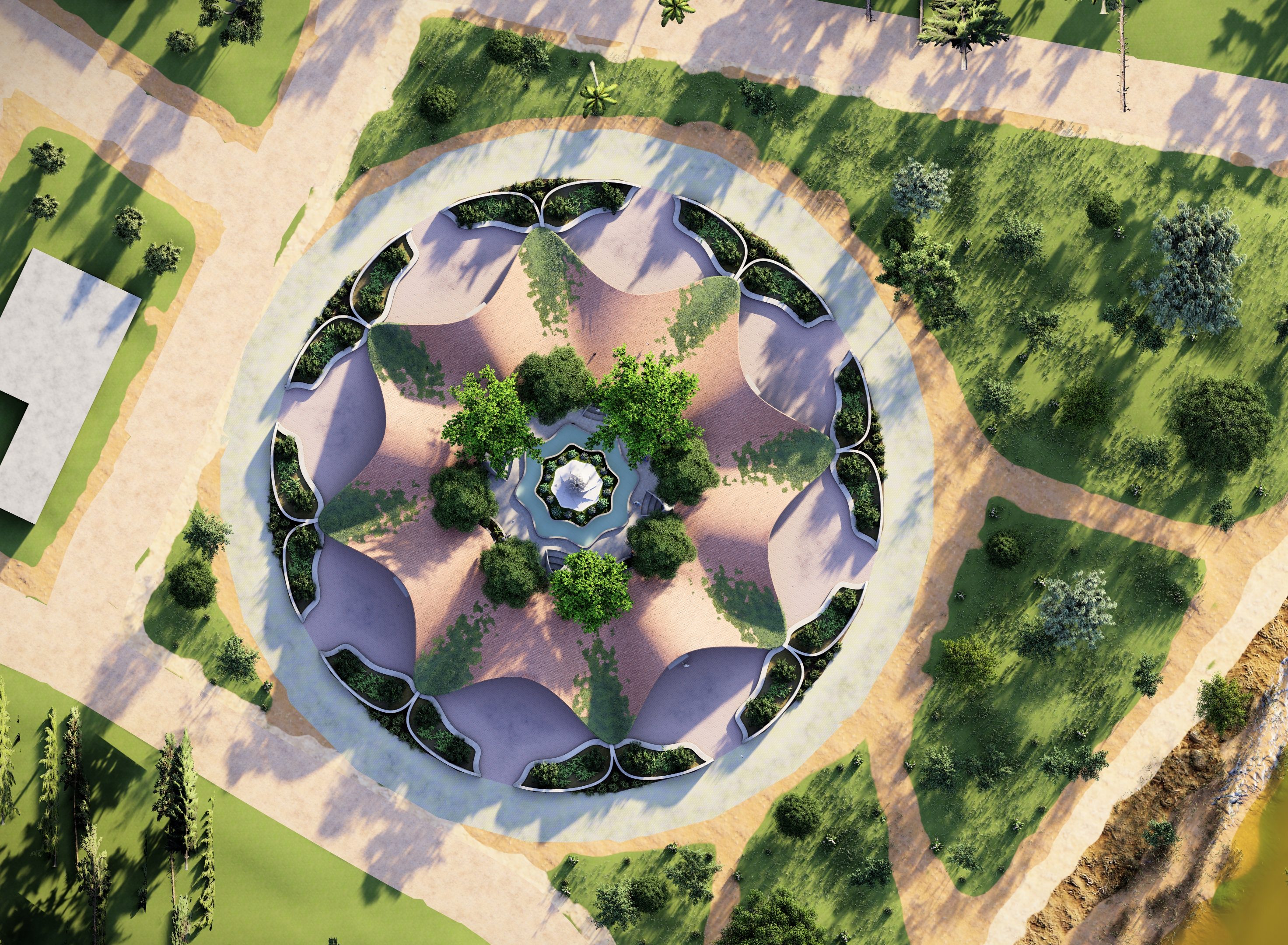
Cremetorium
This project explores the architectural concept of a crematorium as a carefully designed space for transition, ritual, and collective reflection. Rooted in the elemental presence of fire, ash, air, and light, the proposal approaches the crematorium not merely as a functional facility, but as a spatial experience that supports mourning with dignity, calmness, and sensitivity.
The design investigates how architecture can shape emotional environments through geometry, procession, materiality, and light. Spaces for gathering, prayer, waiting, and farewell are organised through a sequence of transitional thresholds that gradually guide visitors through the rituals associated with loss and remembrance. Open courts, shaded passages, framed views, and naturally ventilated spaces create moments of pause and contemplation while maintaining a sense of openness and comfort.
Inspired by traditional Indian cremation practices and sacred urban landscapes such as Varanasi, the project reinterprets ritualistic spatial patterns through a contemporary architectural language. Geometry and repetition become important planning tools, informing movement, orientation, and ceremonial functions across the site.
The crematorium is conceived as a timeless civic structure where architecture becomes a quiet backdrop to ritual. Rather than monumentalising death, the project focuses on creating humane and spatially sensitive environments that balance functionality with emotional resonance, allowing the built form to hold memory, process, and collective experience with restraint and clarity.
Related


